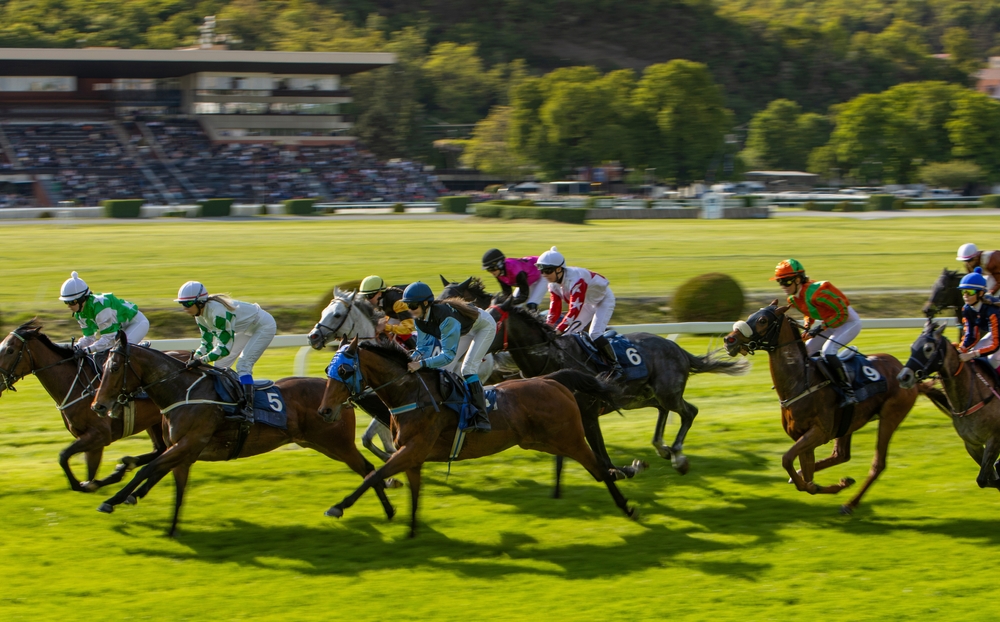
If you’ve ever found yourself searching for Ascot horse racing tips before a big meeting and ended up more confused than when you started, you’re not alone. Ascot is one of those racecourses where the context matters as much as the selections themselves. The track, the meeting type, the distances on the race card, all of it shapes how races play out. So before you look at any horse racing tips for Ascot, it helps to understand what you’re actually dealing with.
This is our rundown of Ascot Racecourse: what makes it different, why Royal Ascot sits in a category of its own, and which factors genuinely influence racing there. No padding, just the stuff that matters.
Ascot Racecourse is located in Berkshire, roughly six miles from Windsor Castle, and has been staging racing since 1711 when Queen Anne ordered a course to be built on the land. That royal connection has never really gone away, the Crown Estate still owns the site, and the Royal Enclosure at Royal Ascot remains one of the most recognisable images in British sport.
But the prestige isn’t just tradition for tradition’s sake. Ascot stages some of the highest-quality flat racing in the world across the summer months, and its jumps card during the winter attracts Grade 1 National Hunt action too. It’s one of very few venues in the UK that operates as a serious racing destination across both codes.
The course itself is right-handed with a straight mile used for sprints. The round course extends to just under two miles, with a significant uphill finish that tests stamina in longer-distance races. That uphill run is worth remembering when you’re looking at the Ascot race card: horses that lack the engine to see out a climb can fade quickly in the final furlong, regardless of their recent form elsewhere.
No. Ascot hosts jumps racing through the autumn and winter. The flat season at Ascot runs from May to October, with Royal Ascot in June forming the centrepiece. The jumps calendar includes the Ascot Chase meeting in February, a Grade 1 contest that attracts some of the best two-mile chasers in training.
When most people talk about Ascot horse racing tips, they’re usually referring to the flat season, and particularly the summer months. But it’s worth being aware that the track you’re watching in November is a different beast to the one you see on a dry June afternoon.
Royal Ascot takes place over five days in June each year, in 2025 it runs from 17 to 21 June, and it is genuinely in a different tier to any other meeting at the track. Around 300,000 people attend across the five days. Prize money across the meeting exceeds £8 million. There are 36 races across the week, and the majority of them carry Group 1, Group 2, or Group 3 status.
To put that in context: a horse winning the Queen Anne Stakes on the opening Tuesday is competing in one of the most prestigious mile races in European flat racing. The Gold Cup on Thursday, run over two miles and four furlongs, is the oldest flat race at the meeting and has been won by legends of the sport including Stradivarius, who landed the race in 2018, 2019, and 2020. The Diamond Jubilee Stakes on Saturday closes the meeting with a Group 1 sprint that regularly attracts international runners.
For anyone researching Royal Ascot horse racing tips, the field quality is the first thing to understand. You’re rarely looking at weak or exposed fields. The form analysis needs to go deeper: trainer records at the meeting, how horses travel in transit from overseas yards, and whether the going suits a runner that’s been campaigned on very different ground elsewhere.
Royal Ascot is the UK’s most prestigious flat racing festival, held annually at Ascot Racecourse in Berkshire over five days in June. It is attended by the British Royal Family and features over 30 races at Group 1, Group 2, and Group 3 level, attracting runners from France, Ireland, the United States, Australia, and beyond. The meeting was first staged in 1711 and has been held almost every year since.
The combination of high-quality fields, competitive markets, and concentrated media coverage makes Royal Ascot one of the biggest betting events of the calendar year in the UK. Bookmakers report Royal Ascot week as one of their busiest outside the Grand National and Cheltenham Festival.
From a flat racing betting perspective, the range of races also matters. You have sprint races over five and six furlongs, mile races, staying contests, and Group races for older horses and Classic generation three-year-olds running in close proximity on the same card. That variety means the form analysis shifts significantly race by race, which is why specific, meeting-focused horse racing tips for Ascot carry more value than generic selections pulled from a racing aggregator.
If you’re trying to assess any horse on the Ascot race card, there are a few things worth building into your thinking.
Yes, draw bias is a genuine factor at Ascot, particularly in sprint races on the straight course. In large-field handicaps over five and six furlongs, a high draw has historically been associated with stronger performance, because horses drawn wide avoid the often-slower ground that develops on the far rail. That said, the going plays a significant role in how pronounced any draw bias becomes. Soft ground can shift the advantage significantly. Always check the going reports before making any sprint selections.
On the round course, draw matters less, but position in running becomes more important given the long run into the home straight and the uphill finish.
Ascot’s drainage means the going can shift meaningfully during a summer meeting. In a dry June, the ground can firm up quickly, which suits horses with a high cruising speed and a flat stride pattern. When it rains before or during the meeting, which is not uncommon in England in June, the ground softens and stamina becomes more of a premium. A horse that has won on fast ground at Newbury may not reproduce that form on soft ground at Ascot, and that discrepancy is often where value sits for anyone following the racing closely.
Ascot’s round course has a tendency to produce end-to-end gallop in staying races, because the pace often goes hard from the front. In the Gold Cup, for example, the combination of distance, competition level, and the undulating track means a genuine gallop is almost always guaranteed. That tends to suit hold-up horses who can pick up late, though the uphill finish means they need a genuine change of gear to deliver.
In shorter races on the straight course, the pace dynamic shifts. Big fields over five furlongs at Ascot can run very fast early, and horses that get outpaced in the first furlong can struggle to get back into it, particularly on good-to-firm ground.
At a meeting like Royal Ascot, trainer patterns become statistically significant because the volume of runners is high enough to draw real conclusions. Aidan O’Brien has a remarkable record at the meeting across all distance categories. John and Thady Gosden, Charlie Appleby, and William Haggas consistently feature among the leading trainers. When you’re assessing Royal Ascot horse racing tips, a trainer that brings 15 runners across the week and wins with six of them is worth following more closely than one who saddles two and goes quiet.
The same logic applies to jockeys. Frankie Dettori’s record at the meeting over his career was extraordinary, his famous “Magnificent Seven” on 28 September 1996, where he won all seven races at Ascot in a single afternoon, remains one of the most remarkable days in British racing history. While that day was at the autumn meeting rather than Royal Ascot, it illustrates just how significant individual jockey-trainer partnerships can be in shaping results at this venue.
If you’re looking for horse racing tips for Ascot, whether that’s for the Royal Meeting in June or one of the other fixtures across the year, the context we’ve laid out above is the starting point. Generic tip lists without this background are difficult to evaluate. Knowing that a sprint selection is drawn high in a 20-runner field on fast ground tells you something meaningful. Knowing the trainer has a Royal Ascot strike rate above 20% across the last five seasons tells you even more.
At Betting Village, our horse racing coverage for Ascot is built around the same research-led approach we apply to football accumulators. The race card matters. The going matters. The form in the specific context of this track and this meeting matters. We’re not listing names for the sake of having something to post, we’re looking for the selections where the evidence actually stacks up.
When Royal Ascot 2025 tips are published on bettingvillage.net, they’ll come with that context attached. If you want to follow along and see which runners we’re backing across the five days, keep an eye on the site and our @BVsportstips account on X where our horse racing selections go up ahead of the meeting.
Ascot hosts both flat racing and National Hunt (jumps) racing. The flat season runs from May to October, with Royal Ascot in June as the headline event. Jumps racing takes place from October through to March, including Grade 1 chase and hurdle races.
Ascot’s prestige comes from its 300-year history, royal ownership and patronage, and the consistent quality of its race programme. Royal Ascot in particular attracts the best flat horses from Britain, Ireland, France, and internationally, competing for prize money that exceeds £8 million across the five-day meeting.
The combination of a straight mile used for sprint races and a right-handed round course with a stiff uphill finish creates two distinct challenges in one venue. The draw bias in large-field sprints, the premium on stamina in longer races, and the consistent quality of competition at Group level all distinguish Ascot from most UK tracks.
The concentration of high-quality races, particularly during Royal Ascot, means the betting markets are exceptionally competitive. Punters looking for an edge seek out form analysis, trainer records, and course-specific insight rather than relying on favourites alone. The volume of races and the variety of distances also means there are multiple angles to research across the week.
Betting should be fun. Gamble responsibly. 18+ only. For support, visit begambleaware.org or call the National Gambling Helpline free on 0808 8020 133.
Betting Village is not a bookmaker. All tips represent our personal opinions and should not be relied upon as financial advice. Always carry out your own research before placing any bets.
Receive up-to-date news about our latest products, discounts, offers and more direct to your inbox.